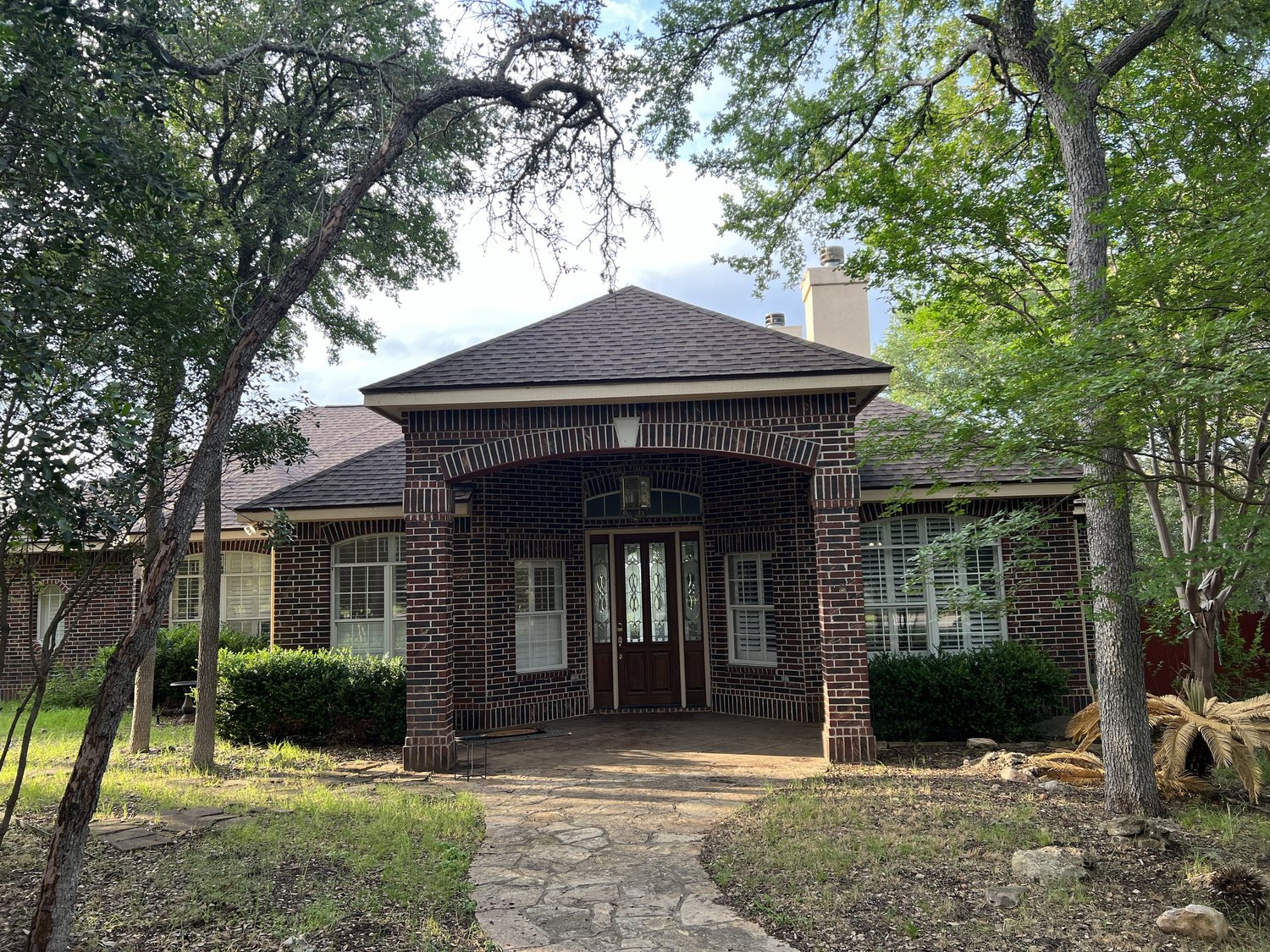
What Rocky Hill Country Lots Really Cost to Build On
What limestone changes, what it does not, and how to price it before design starts.
Author: Vanessa Harris, Owner of Riverbend Hill Country Homes · Updated October 23, 2026
Does Limestone Make a Hill Country Lot More Expensive to Build On?
Often it adds cost, but not always, and not by a fixed amount. Limestone shapes excavation, foundations, and utility trenching on many Hill Country lots, yet it does not mean every lot needs blasting. Investigating rock early helps us identify costs and allowances before the proposal.
Surface observations and testing help us plan excavation; the budget also needs an allowance for conditions they cannot reveal.
So this page is not a warning about limestone. It is how we put a price on it before you sign anything.
What Is Under a Typical Hill Country Lot?
Under a typical Hill Country lot sits limestone, often close to the surface. Federal soil mapping of the Edwards Plateau, a landscape of mesas, ridges, and canyons, shows much of it shallow to bedrock, with other soils on cemented caliche (a hard, lime-cemented layer). Where the rock starts, digging gets harder and more expensive, and that depth differs parcel to parcel.
It is also karst terrain, meaning limestone riddled with caves and springs. The slow dissolution of limestone is what made the springs and caves this region is loved for, and now and then a cave or a spring on a parcel triggers an environmental review.
None of this is exotic to build on. All of it rewards a careful read before design, because foundations, driveways, utility trenches, and septic fields all have to work around the same rock.
Sources: USDA soil survey of the Edwards Plateau · Texas Water Development Board on Edwards Plateau karst
How Much Does Limestone Add to a Building Budget?
There is no honest region-wide dollar figure, because rock depth and hardness change parcel by parcel. What we can say is where the cost lands: excavation for the pad and foundation, the foundation design itself, utility trenching, driveway cuts on sloped parcels, and septic siting. Slope compounds each one, and past county thresholds it adds stormwater requirements of its own.
Because depth and hardness vary, a defensible budget treats rock in layers: what the walk can see, what survey and geotechnical work can measure, and an explicitly priced allowance for what nothing can see. If the ground still surprises, the options come to you in writing, priced, before work proceeds.
What you should not accept is a clean number that leaves the ground out entirely.
Sources: Travis County stormwater requirements
How Do You Price Rock Before Design Starts?
We price rock in three steps: the walk, the measurements, and a written allowance. First, the walk. Outcrops, exposed ledge, and any place a road, a pad, or a neighbor’s driveway has been cut into the hill tell us a lot. That is why we try to walk a parcel with clients before they buy it, and you can ask us to walk yours.
Second, the measurements: survey and geotechnical work where the design warrants it, so the foundation is engineered for the ground it will actually bear on rather than the ground we hoped for.
Third, the allowance, priced and written into the budget, sized to your parcel rather than to a rule of thumb someone uses for the whole region. The allowance exists because survey and geotechnical work sample the ground; they do not see all of it. It is the same method we use whenever we build a custom home on land you already own.
Keep Planning
- Custom home building on your land: how a Riverbend build is priced and run
- The Hill Country land buying checklist: water, septic, rock, access, and who approves your plans
- How much it costs to build a house in Texas: cost per square foot by tier
- Building in Dripping Springs: local ground, water, and permit rules
Rock and Site Questions
How much does rock add to a Hill Country construction budget?
There is no defensible region-wide number, and you should distrust anyone who quotes one. Rock depth and hardness vary parcel by parcel across the Edwards Plateau, so the defensible approach is the one we use: read the parcel, carry a priced allowance for what testing cannot see, and put options in writing if the ground surprises anyway.
Does every Hill Country lot need blasting or piers?
No. Claims that every lot needs blasting, piers, or a fixed rock contingency are marketing, not engineering. What is true is that much of the region sits on shallow limestone or cemented caliche, so excavation and foundation design deserve parcel-specific attention before design, not after.
How do you know what the rock will cost before digging?
In layers. The walk reads surface rock and outcrops. Survey and geotechnical work read what is under the pad. The allowance covers what even testing cannot see. By the time a budget reaches you, the rock carries a priced line instead of a hope.
Can rock make a lot not worth buying?
It can, when the buildable area is small and the rock is severe: site work can overwhelm what the parcel is worth to your project. Far more often the rock simply belongs in the offer price. That is why we walk parcels with clients before they close.
Does rock affect septic and drainage too?
Yes. Septic systems are designed around the ground they sit in, and this is karst country, where limestone dissolution creates caves and springs; significant features can bring environmental review. Slopes past county thresholds add stormwater requirements. Much of it can be investigated early, with an allowance held for the rest.
Is building on rock ever an advantage?
Sound rock can support an engineered foundation well, and hillside rock is why the views exist. Rock is not a problem. It is a line in the budget, and the builders who price it early are the ones whose budgets hold.
More Guides
Get in Touch
Call us, or send the form and tell us what you are planning.
Vanessa answers this number, weekdays 9 to 5.